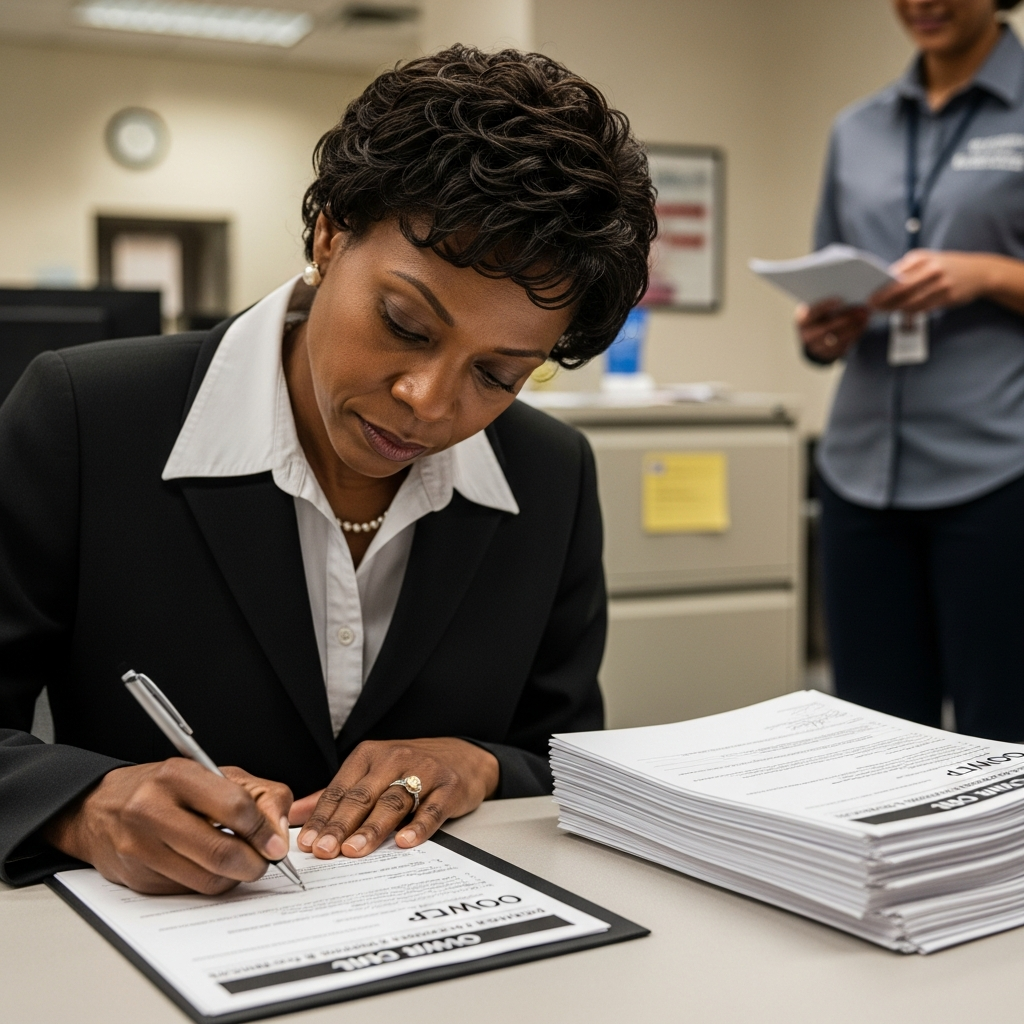
What Federal Employees Should Bring to an OWCP Clinic Visit in Dayton

You’re sitting in your car outside the OWCP clinic in Dayton, staring at the manila envelope on your passenger seat. Inside? A jumbled mess of papers you *think* might be relevant to your workers’ compensation claim. Your appointment’s in ten minutes, and that familiar knot of anxiety is tightening in your stomach.
Sound familiar?
Here’s the thing about federal workers’ comp claims – they’re kind of like preparing for the world’s most important open-book exam, except nobody bothered to tell you which books you’d need. And unlike your college days, you can’t just wing it and hope for a C+. This stuff matters. A lot.
I’ve watched countless federal employees walk into OWCP clinics feeling exactly like you probably do right now. Overwhelmed. Underprepared. Maybe a little frustrated that something as straightforward as “I got hurt at work” has turned into this bureaucratic maze that would make Kafka weep.
But here’s what I’ve learned after years of helping folks navigate this system: the difference between a smooth clinic visit and an absolute disaster often comes down to one thing – what you bring with you. Not just the obvious stuff (though yes, you definitely need your ID), but the kind of documentation that makes the difference between getting the care you need and… well, getting sent home to “gather more information.”
Think of it this way – you wouldn’t show up to a job interview without a resume, right? Or go to the DMV without knowing exactly which seventeen forms they’re going to demand? Same principle applies here, except the stakes are your health, your income, and your sanity.
The frustrating part? The OWCP system isn’t exactly known for its crystal-clear communication. You’ve probably received letters that read like they were written by robots for other robots. Half the time, it feels like they’re speaking in code – and honestly, sometimes they basically are.
That’s where this gets personal for you as a federal employee. You’ve dedicated your career to public service (thank you for that, by the way). You’ve dealt with enough red tape to wrap the Washington Monument. The last thing you need is to have your own government’s workers’ comp system add another layer of bureaucratic frustration to an already stressful situation.
But here’s the good news – and yes, there actually is good news in this story. Once you understand what the clinic needs from you, the whole process becomes so much more manageable. It’s like having the answer key, or finally figuring out that one colleague’s cryptic email style. Suddenly, what seemed impossible starts making sense.
Over the next few minutes, we’re going to walk through exactly what you need to bring to your OWCP clinic visit in Dayton. Not just a generic checklist you could find anywhere (trust me, those exist and they’re about as helpful as a chocolate teapot), but the real-world, practical stuff that actually matters.
We’ll talk about the documents that’ll make the medical staff’s job easier – which, let’s be honest, makes your life easier too. The forms that seem optional but really aren’t. The medical records that might be gathering dust in your filing cabinet but could be the key to getting your claim approved. And yes, we’ll cover some of the less obvious things that could save you from having to make a return trip.
You’ll also learn what NOT to bring (because apparently, there’s such a thing as too much documentation – who knew?), how to organize everything so you don’t look like you’re conducting a paper tornado, and a few insider tips that can help your appointment go more smoothly.
Most importantly, you’ll walk away feeling prepared instead of anxious. Because you deserve to focus on getting better, not on wondering whether you forgot some crucial piece of paperwork that’s going to derail your entire claim.
Ready? Let’s make sure your next clinic visit is as painless as possible…
Getting Your Ducks in a Row
The foundation of any successful OWCP clinic visit starts with understanding what you’re walking into…
Understanding OWCP – It’s Not Your Regular Doctor’s Visit
Let’s be honest – navigating federal workers’ compensation feels like trying to solve a puzzle where someone keeps changing the pieces. The Office of Workers’ Compensation Programs (OWCP) isn’t your typical insurance setup, and frankly… that catches a lot of people off guard.
Think of OWCP like a very particular relative who means well but has very specific ways of doing things. They’ll help you out when you’re hurt on the job, absolutely – but they want documentation for everything. I mean *everything*. Where your regular health insurance might accept a quick “yeah, I hurt my back,” OWCP wants to know exactly when, where, how, and what color socks you were wearing (okay, maybe not the socks part, but you get it).
Why Federal Work Injuries Are Different
Here’s where it gets a bit confusing – and honestly, it should be simpler than this. When you’re injured as a federal employee, you’re not just dealing with workers’ comp… you’re dealing with *federal* workers’ comp. It’s like the difference between playing checkers and playing 3D chess while riding a unicycle.
Your injury doesn’t just need to be documented – it needs to be documented in a very specific way that connects the dots between your job duties and your current symptoms. The clinic needs to understand not just that your shoulder hurts, but how your daily tasks as a postal worker (or TSA agent, or forest ranger, or whatever your role is) specifically contributed to that pain.
The Paper Trail That Actually Matters
You know that shoebox full of medical papers you’ve been avoiding? Well, for an OWCP visit, that mess might actually contain gold. But here’s the thing – not all medical records are created equal in the eyes of federal workers’ compensation.
The documentation that matters most is anything that creates a clear timeline from your injury to your current condition. Think of it like connecting the dots in a coloring book – except some of the dots are missing, and others are written in invisible ink. Actually, that’s probably too accurate of an analogy…
Your treating physicians’ notes, diagnostic test results, and any previous OWCP correspondence aren’t just helpful – they’re essential. The clinic needs to see the whole picture, not just today’s snapshot. And honestly? Sometimes even we medical folks struggle to piece together incomplete records, so don’t feel bad if your paperwork feels overwhelming.
Employment Details Matter More Than You’d Think
This might seem counterintuitive, but your job description could be just as important as your X-rays. I’ve seen cases where the medical evidence was crystal clear, but the connection to work duties wasn’t properly established – and that created unnecessary headaches for everyone involved.
Your physical job requirements, the specific incident that caused your injury, and how your symptoms affect your ability to perform your duties… these aren’t just administrative details. They’re the foundation that everything else builds on. It’s like trying to hang a picture without finding the stud in the wall – you might get it up there, but it’s not going to hold for long.
The Clinic’s Perspective – What We’re Really Looking For
When you walk into our clinic with OWCP paperwork, we’re not just examining your injury – we’re also building a bridge between your medical reality and the federal compensation system’s requirements. And sometimes, that bridge feels like it’s made of dental floss and good intentions.
We need to understand your work environment, your injury mechanism, and your current functional limitations in a way that translates into OWCP’s language. Think of us as translators, converting medical findings into federal bureaucracy speak (though hopefully with more compassion than your average government form).
The examination itself might feel more thorough – or different – than what you’re used to. That’s because we’re not just treating symptoms; we’re documenting everything in a way that supports your claim and helps ensure you get the benefits you’re entitled to.
Coming prepared isn’t just about making the appointment go smoother (though it definitely helps with that). It’s about making sure nothing falls through the cracks in a system that, let’s face it, already has plenty of cracks to begin with.
Pack Like Your Claim Depends On It (Because It Does)
Here’s what nobody tells you about OWCP clinic visits – they’re basically detective work, and you’re gathering evidence. Don’t just show up with your ID and hope for the best. That’s like bringing a butter knife to a… well, you get it.
Start with a dedicated folder – not some crumpled envelope or your purse’s black hole. Get one of those expandable file folders with sections. Label them: Medical Records, Work Documentation, Correspondence, and Photos. Trust me, fumbling through loose papers while a doctor waits isn’t the impression you want to make.
Your medical records section should include everything – and I mean everything – related to your injury. That initial emergency room visit? Include it. Physical therapy notes from six months ago? Those too. Even if it seems minor… actually, especially if it seems minor. The smallest detail might be the missing puzzle piece that validates your claim.
The Work History Detective Kit
Now here’s where federal employees have an advantage – you’ve got documentation for everything. Use it.
Bring your SF-50s (Notice of Personnel Action) for at least the past two years. These show your job duties, pay grade changes, and work location history. If your injury developed over time – like repetitive stress or gradual hearing loss – these forms can establish the timeline and work conditions that contributed to your condition.
Your position description is pure gold. Not the generic one from HR’s website, but your actual PD that reflects what you really do day-to-day. If you lift boxes all day but your official PD says “clerical duties,” that discrepancy matters more than you’d think.
Don’t forget performance evaluations and any awards or commendations. These might seem unrelated, but they paint a picture of you as a reliable employee – not someone looking to game the system. (Because sadly, that’s a perception you’re fighting against.)
The Digital Evidence Arsenal
Your smartphone is your secret weapon. Take photos of your workplace – the specific area where your injury occurred, any hazardous conditions, equipment you use daily. But be smart about it. Don’t go around snapping pictures like a tourist if it’s going to raise eyebrows. Be discreet.
Screenshot relevant emails about safety concerns, work assignments, or anything that shows you reported problems before your injury. Email timestamps are incredibly valuable for establishing timelines.
If you’ve been tracking symptoms or limitations, bring printouts. That notes app on your phone where you jotted down “couldn’t sleep again, back still killing me”? Print those out. They’re contemporaneous records – legal gold.
The Witness Strategy
Compile contact information for witnesses – coworkers who saw your injury happen, supervisors who knew about ongoing problems, even janitors who might have witnessed hazardous conditions. You don’t need sworn statements (yet), just names and phone numbers.
But here’s the insider tip: also bring contact info for personal references who can speak to how your injury has affected your daily life. Your spouse, adult children, close friends who’ve seen you struggle with simple tasks you used to handle easily.
The Communication Trail
Print out every piece of OWCP correspondence you’ve received. Every letter, every form, every denial (especially the denials). Organize them chronologically – it tells a story.
Include your claim number on everything. Write it on sticky notes if you have to. OWCP handles thousands of cases, and you want to make their job easier, not harder.
The Financial Reality Check
Bring documentation of any out-of-pocket expenses related to your injury. Medical bills, prescription receipts, even mileage logs if you’ve driven to multiple appointments. OWCP can reimburse reasonable expenses, but only if you can prove them.
If you’ve used sick leave or LWOP (Leave Without Pay) because of your injury, bring those leave and earnings statements. They help establish the financial impact of your condition.
The Secret Weapon: Your Story
Finally – and this is crucial – prepare a written timeline of your injury and its progression. Not a novel, just a clear, chronological account. When did it start? What made it worse? How has it affected your work and personal life?
Practice telling this story concisely. You’ve got limited time with the examining physician, and rambling doesn’t help your case. But being prepared, organized, and thorough? That’s what separates successful claims from the ones that languish in bureaucratic limbo.
Remember, this visit isn’t just a medical exam – it’s your opportunity to present a comprehensive picture of how a federal workplace injury has impacted your life. Come prepared like your financial future depends on it… because it does.
The Reality of Proving Your Work Connection
Here’s what nobody tells you upfront – establishing that clear link between your job and your injury can feel like solving a puzzle with missing pieces. You might think it’s obvious that lifting those heavy mail bags for fifteen years caused your back problems, but the clinic needs concrete evidence.
The solution? Start documenting everything before your visit. Write down specific tasks that trigger pain, note the exact equipment you use, and – this is crucial – get statements from coworkers who’ve witnessed your struggles. That colleague who always says “you should get that looked at” when you wince? Ask them to put it in writing.
When Your Medical Records Feel Scattered to the Wind
Federal employees often have medical care spread across different systems – maybe you started treatment at the VA, switched to private insurance, then tried urgent care when things got worse. Walking into that OWCP clinic with incomplete records is like showing up to a potluck with just a fork.
Don’t panic if you can’t gather everything (we’ve all been there with medical bureaucracy). Contact each provider at least two weeks before your appointment and request complete records. If something’s still missing, bring a detailed list of what you’ve requested and when. The clinic staff appreciates honesty about gaps more than they appreciate you pretending those three months of physical therapy never happened.
The Supervisor Documentation Nightmare
This one’s particularly frustrating because it involves… well, other people. Getting your supervisor to complete injury reports promptly can feel like herding cats. Some supervisors drag their feet, others fill out forms incorrectly, and a few seem to treat the whole process like you’re somehow inconveniencing them by getting hurt at work.
Your best bet? Be proactive and slightly pushy (in the nicest way possible). Send your supervisor a polite but firm email requesting the CA-1 or CA-2 form completion, and copy their supervisor if needed. Follow up weekly. Keep screenshots of your requests – that paper trail matters if there are delays that aren’t your fault.
The Pain Description Struggle
Describing chronic pain to medical professionals can feel impossible. How do you explain that weird burning sensation that comes and goes? Or that your “good days” still involve significant discomfort, but you’ve just learned to function through it?
Here’s a trick that actually works – keep a pain diary for at least a week before your appointment. Note pain levels on a 1-10 scale, what triggers flare-ups, how it affects specific work tasks, and what (if anything) provides relief. This gives you concrete examples instead of just saying “it hurts a lot sometimes.”
When Previous Claims Create Confusion
If you’ve had other OWCP claims – especially if they were denied or only partially accepted – walking into a new evaluation can feel loaded with baggage. You might worry that previous denials will influence current decisions, or that multiple claims make you look like someone who’s “always getting hurt.”
The truth is, each claim should be evaluated independently. Bring documentation of previous claims, but focus your energy on thoroughly documenting your current condition. Don’t let past frustrations overshadow present needs – this visit is about today’s reality, not yesterday’s disappointments.
The Return-to-Work Anxiety
Many federal employees arrive at OWCP clinics terrified they’ll be cleared for full duty when they’re nowhere near ready. That fear of being pushed back too soon – potentially making injuries worse – can make you downplay your limitations or, conversely, overstate them out of self-protection.
Be brutally honest about your current capabilities. If you can sit for thirty minutes before needing to stand, say thirty minutes – not “I can sit for a while” or “I can barely sit at all.” Specific limitations help medical professionals make appropriate work restriction recommendations that actually protect your recovery.
The Follow-Up Coordination Challenge
The appointment ends, you leave with instructions and possibly restrictions, and then… crickets. Coordinating follow-up care, communicating with your supervisor about work limitations, and tracking claim progress often falls through cracks.
Create a simple tracking system before you even go to your appointment. Set calendar reminders for following up on authorizations, checking claim status, and scheduling recommended treatments. And yes, put everything in writing when communicating with supervisors about medical restrictions – memories fade, but emails don’t.
What to Expect During Your Visit
Walking into that OWCP clinic for the first time? Yeah, it’s normal to feel a bit anxious. You’re probably wondering if the doctor will actually listen, if they’ll understand your work situation, or if this whole thing will just be another bureaucratic runaround.
Here’s the reality – most OWCP-approved physicians in Dayton have seen plenty of federal employees dealing with workplace injuries. They get it. They understand the unique stressors of federal work environments, the importance of documentation, and honestly? They’re usually pretty efficient because they know the system.
Your appointment will likely run 45 minutes to an hour. The doctor will review your case file (this is where all that paperwork you brought comes in handy), ask detailed questions about your injury, and perform a thorough examination. Don’t be surprised if they ask you to demonstrate certain movements or describe your pain levels in different positions – they’re building a complete picture for their report.
One thing that catches people off guard… the doctor might ask questions that seem unrelated to your injury. “How’s your sleep? Any changes in your mood? What does your typical day look like now versus before the injury?” This isn’t nosiness – it’s smart medicine. Workplace injuries affect your whole life, and a good physician recognizes that.
The Timeline Reality Check
Let’s talk about what happens next, because this is where expectations can get wonky.
Your doctor will submit their report to OWCP, but don’t expect immediate fireworks. The review process typically takes 2-4 weeks, sometimes longer if they need additional information or if your case is complex. I know, I know… when you’re dealing with pain or limitations, every day feels like forever.
During this waiting period, you might feel like you’re in limbo – and honestly, you kind of are. It’s frustrating, but it’s also completely normal. Use this time to keep detailed records of your symptoms, any changes in your condition, and how your daily activities are affected. This information could be valuable later.
If OWCP approves additional treatment, scheduling your next appointments usually happens within 1-2 weeks. Physical therapy? That might start even sooner – many clinics in Dayton can get you in within days once they have authorization.
Preparing for Potential Outcomes
Here’s something most people don’t think about ahead of time – what if the doctor’s report doesn’t align perfectly with what you expected?
Sometimes physicians see things differently than we do. Maybe they identify contributing factors you hadn’t considered, or perhaps they recommend a treatment approach that surprises you. This doesn’t mean they’re wrong or that they don’t believe you’re injured. Medical professionals look at the whole picture – your injury, your work demands, your overall health, and what treatments are most likely to get you back to full function.
If you disagree with their assessment, you have options. You can request a second opinion or ask your case manager about seeing a specialist. But before you go that route… take a day or two to process the information. Sometimes what initially feels disappointing actually opens doors to more effective treatment.
Building Your Support Network
Actually, that reminds me of something important – you don’t have to navigate this alone. Your union representative (if you have one) can be incredibly helpful in understanding your rights and options. Many federal employees don’t realize they can bring a union rep to meetings with OWCP or even to medical appointments if they feel it’s necessary.
Your supervisor also plays a role in this process. Good supervisors understand that supporting injured employees isn’t just the right thing to do – it’s smart management. Keep them informed about your appointments and any work restrictions your doctor recommends.
Moving Forward with Confidence
The truth is, most OWCP cases in Dayton resolve successfully – meaning employees get appropriate treatment and return to work, often with accommodations that prevent re-injury. The system, while sometimes slow, generally works.
Your job right now is to be an active participant in your recovery. Follow your treatment plan, keep thorough records, communicate clearly with all parties involved, and don’t hesitate to ask questions when something isn’t clear.
Remember – you earned these benefits through your federal service. You deserve quality medical care, and you have every right to advocate for yourself throughout this process.
You know, preparing for your OWCP clinic visit doesn’t have to feel overwhelming – even though I totally get why it might seem that way at first. The paperwork alone can make anyone’s head spin, and when you’re already dealing with an injury or illness, the last thing you want is more stress.
But here’s the thing… you’ve got this. Really.
Think of gathering these documents like packing for a trip – you want everything you might need, but you don’t have to carry the whole house with you. Your CA-1 or CA-2, medical records, that supervisor’s statement, your work history details – they’re all just pieces of your story. And every piece helps paint a clearer picture of what you’ve been through and what you need moving forward.
The Human Side of the Process
What strikes me most about working with federal employees is how dedicated you all are. You show up, you do the work, you care about serving others… and sometimes that means you put your own health on the back burner longer than you should. Sound familiar?
That’s exactly why these clinic visits matter so much. This isn’t just about paperwork or jumping through hoops – it’s about getting you the care and support you deserve. The doctors and staff at OWCP clinics? They see federal employees every single day. They understand the unique challenges you face, the physical demands of your job, the stress that comes with public service.
You’re Not Alone in This
I’ve talked to countless federal employees who felt anxious before their first OWCP visit. “What if I forget something important?” “What if they don’t believe me?” “What if I mess up the paperwork?”
Take a deep breath. These healthcare providers are on your team. They want to help you heal, get back to work if possible, or ensure you’re properly supported if returning isn’t in the cards. That organized folder you’re putting together? It shows you’re taking this seriously, and that matters.
Remember, too, that you don’t have to navigate this alone. Whether it’s a trusted colleague who’s been through the process, your union representative, or even calling ahead to the clinic with questions – support is available.
Moving Forward with Confidence
Your health and wellbeing aren’t just checkboxes on a government form – they’re deeply personal, and they matter. Every document you gather, every appointment you attend, every question you ask… it’s all part of advocating for yourself. And that takes courage.
If you’re feeling overwhelmed by the process or just need someone to talk through your concerns, don’t hesitate to reach out. Sometimes a quick conversation can clear up confusion, ease anxiety, or simply remind you that you’re doing everything right.
We’re here to support you through this – not just with the logistics and paperwork, but with the real, human side of dealing with a work-related injury or illness. You’ve spent your career taking care of others through your federal service. Now it’s time to take care of yourself.
You deserve quality care, proper support, and someone in your corner who understands what you’re going through. That’s not too much to ask – it’s exactly what you should expect.